
Jacobs Foundation and CERES Collaborate on a Second Stakeholder Workshop in Ghana
On September 25, 2023, the Jacobs Foundation in partnership with the CERES team in Ghana conducted their second stakeholder workshop as part of the Open Learning Platform for Primary Education (OLPPE) project. The two-part workshop witnessed participation from 26 teachers, engaging them in discussions centered on evaluating traditional book content for primary grades and assessing a sample content tailored for counting backwards.
Workshop Objectives:
- Assessing Traditional Content: The workshop delved into understanding the techniques teachers utilize to assess traditional hardcopy content for grades 1-3. The evaluation process is paramount in pinpointing both the strengths and areas of improvement in current educational tools.
- Online Content Evaluation Framework: The team unveiled an evaluation system for online teaching materials, inviting teachers to share their insights. This feedback will be instrumental in refining the system for future use.
- Content Brainstorming: Teachers and the team collaborated on brainstorming sessions, focusing on content that educates children on counting numbers in reverse. This hands-on exercise aims to curate effective learning materials.
- Highlighting Challenging Topics: The workshop gave teachers a platform to spotlight topics they deem difficult for grades 1-3. These areas signify gaps where enhanced resources can aid in better instructional delivery.
The initiative was a testament to the collaborative efforts of the Jacobs Foundation, the CERES team, and the teaching community. Their collective goal is to elevate the standard of education via the creation and application of open electronic content. By emphasizing teacher feedback, the OLPPE project seeks alignment with the requirements of Ghanaian educators and young students, especially in primary grades.
Workshop Particulars:
PART 1: Assessing Traditional Book Content for Primary Grades
In Ghana, the Ghana Education Service (GES) mandates specific textbooks for lower primary grades. Teachers at this level generally employ the following evaluation methods:
- Familiarization: Teachers must fully comprehend the content before introducing it in class. If educators find content challenging, it’s a red flag regarding its suitability for the intended grade.
- Age Appropriateness: Recognizing that older children might grasp concepts more easily than their younger peers, even within the same grade, is essential.
- IQ Assessment: While there isn’t a set metric to gauge a child’s IQ, teachers often engage students during lessons. Those who respond well are perceived to have a higher IQ. Teachers also adapt their teaching techniques based on student comprehension levels. However, it’s noted that some students might be ahead due to additional private lessons, a common practice in Ghana.
- Soliciting Feedback: Teachers rely on learner output to differentiate between quick and slow learners. They use varied assessment methods, from verbal questioning to written tests, ensuring inclusive evaluation.
- Practical Demonstrations: Sometimes, educators use hands-on examples both within and outside the classroom to simplify complex subjects.
- Ability Grouping: Recognizing that students learn at varied paces, teachers categorize them based on their learning speeds. They also pay particular attention to children with special needs, adapting their methods to cater to individual disabilities. For instance, for hearing-impaired students, teachers might lean more on visual aids, which can offer clearer comprehension than speech.
The Jacobs Foundation and CERES team’s efforts are evident in their dedication to understanding and meeting the unique educational needs of Ghana’s young students.
Navigating the Digital Shift: Teachers Embrace Online Content in Education
Insights from the workshop highlighted a growing trend among teachers: the pivot towards utilizing online content. Based on a brief poll during this session, teachers showcased a commendable adoption of digital resources in their teaching methodologies.
Diving into the Data:
While figures were provided, specific details of Figures 1 and 2 were not described in the text. However, one can infer that:
- Frequency of Use: Teachers are increasingly integrating online content into their teaching routines, suggesting a shift from the traditional reliance solely on textbooks.
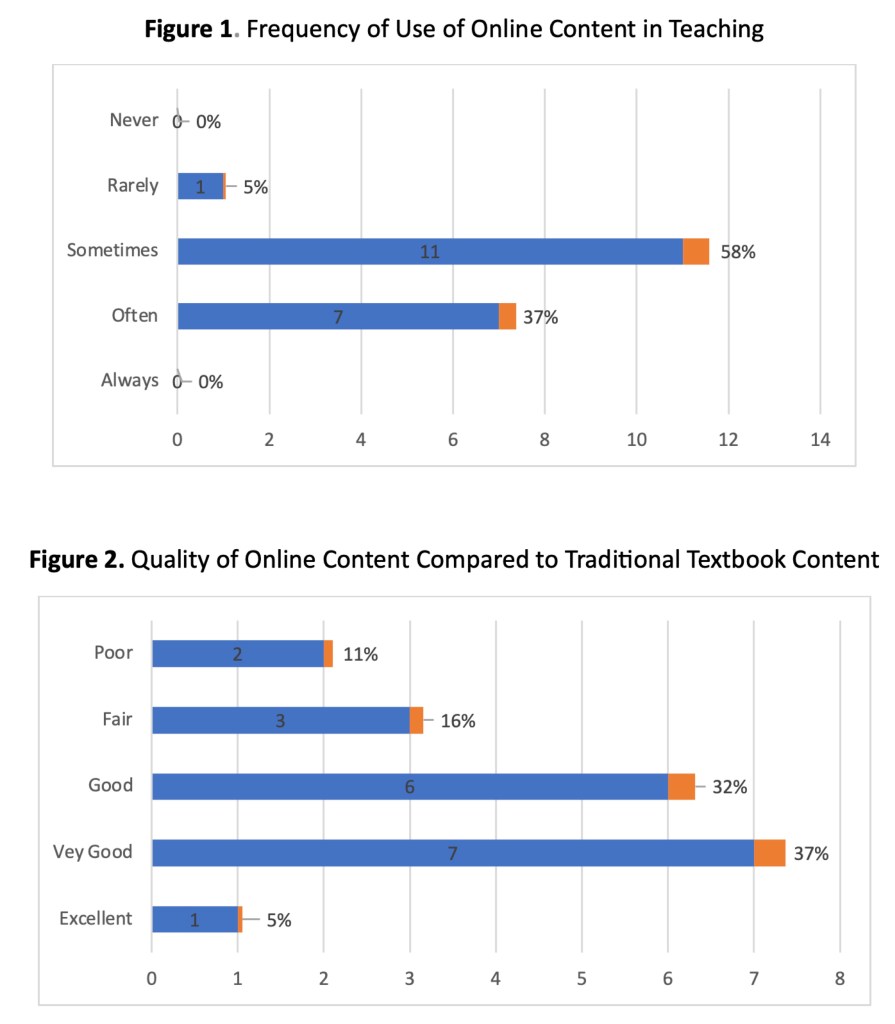
- Quality Comparison: There seems to be a growing confidence in the quality and effectiveness of online materials when juxtaposed against traditional textbook content.
Building Trust through Viewership:
One significant factor that has emerged in the digital content trust-building process is viewership. Content that garners high views, particularly on platforms like Facebook and YouTube, tends to resonate more with teachers. Such platforms offer a plethora of videos and imagery, providing educators with versatile tools for both immediate and future reference.
Online Versus Print: A Clear Preference?
Digital teaching tools present several benefits over traditional print materials:
- Simplified Approach: Online content often breaks down complex concepts into digestible segments, aiding teachers in making subjects more relatable and comprehensible for students.
- Flexibility: The digital format allows teachers to tailor the content. Even if a digital resource is designed for a higher grade level, educators have the flexibility to adapt the teaching style to their students’ understanding.
- A Shift from Rote Learning: Online resources tend to move away from the age-old “chew and pour” method endemic in local textbooks. This traditional approach often promotes mere memorization, sidelining genuine understanding. In contrast, digital content promotes a deeper grasp of subjects.
The Hybrid Approach:
In an interesting development, some publishers, like Brain, are bridging the gap between traditional and digital. They are embedding hyperlinks and YouTube video references directly into their printed textbooks, offering a blended learning experience. Such innovations ensure that students and educators can tap into the benefits of both worlds.
In conclusion, as the digital age progresses, educators are becoming more adept at harnessing online resources, ensuring that students receive a comprehensive, modern, and effective education.
Embracing the Future of Education: The Digital Transformation in Ghana’s Classrooms
In today’s rapidly changing educational landscape, the role of online content has become indispensable. As revealed through the insights from recent workshops and polls, Ghana’s educators are progressively recognizing the advantages of integrating digital resources into their pedagogical approaches. The data suggests an uptick in the frequency and trust teachers place in online materials, with platforms like Facebook and YouTube emerging as valuable repositories of educational content.
The clear preference for online tools is driven by their ability to simplify complex subjects, offer flexibility in teaching methods, and promote genuine understanding over mere memorization. The move away from the traditional “chew and pour” methodology highlights a collective effort to elevate the quality of education. Moreover, the innovative hybrid approach, as adopted by publishers like Brain, exemplifies the merging of traditional and digital mediums, ensuring a holistic learning experience.
In essence, the future of education in Ghana seems poised for a blended approach, harnessing the strengths of both print and digital resources. As educators navigate this transformation, their adaptability and openness to change will play a pivotal role in shaping the next generation of learners.
About the Project:
The Open Learning Platform for Primary Education is funded by CERES and the Jacobs Foundation. The research team, led by Prof. Richard Boateng, can be reached by richboateng[@]ug.edu.gh
Cite as:
Boateng, R., Marfo, J. S., Boateng, S. L., Penu, O. K. A., Budu, J., & Asamoah, P. (2023 September 25). Evaluating Content for Teaching of Mathematics in Lower Primary Education Medium. https://medium.com/@richard.boateng/evaluating-content-for-teaching-of-mathematics-in-lower-primary-education-part-1-18b68abf76e4
 Open Learning Platform for Primary Education